Address
304 North Cardinal
St. Dorchester Center, MA 02124
Work Hours
Monday to Friday: 7AM - 7PM
Weekend: 10AM - 5PM
Address
304 North Cardinal
St. Dorchester Center, MA 02124
Work Hours
Monday to Friday: 7AM - 7PM
Weekend: 10AM - 5PM

In the modern manufacturing world, efficiency, precision, and consistency are the driving forces behind success. For decades, the polishing process in metalworking was considered a purely manual task—labor-intensive, time-consuming, and dependent on the operator’s skill. However, as competition grows and quality demands increase, metal manufacturers across the globe are turning to automatic polishing machines to replace traditional hand polishing.
At JiangMen Quanda Machinery Manufacturing Co., Ltd., we’ve witnessed and led this transformation firsthand. With over 20 years of manufacturing experience and a core team boasting more than 30 years of polishing expertise, we’ve helped hundreds of factories transition from manual polishing to automated systems. Here’s why this shift is not just a trend—but the future of metal finishing.
Manual polishing has long been the backbone of surface finishing in industries such as die-casting, stainless steel, lighting, and kitchenware manufacturing. However, as production scales grow, its limitations become increasingly evident.
The industry has long sought a better solution—and automation is the answer.
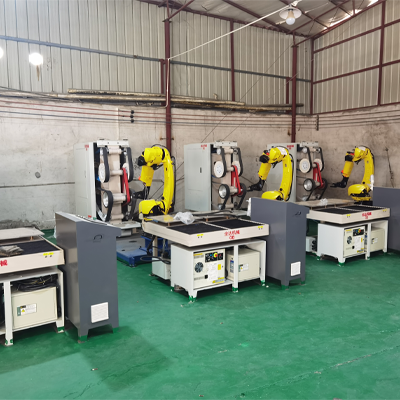
An automatic polishing machine is designed to perform the same polishing, deburring, and grinding tasks traditionally done by hand—but with the precision, speed, and repeatability of a machine. Depending on the model, these machines can feature multi-axis CNC control, robotic arms, or custom fixtures designed to handle specific parts or materials.
At Quanda Machinery, our product range includes:
These machines bring uniformity, speed, and reliability to every production line.
Unlike manual polishing, which depends on human skill, automatic machines ensure the same polishing result for every piece. Once programmed, the machine maintains a fixed pressure, speed, and path, guaranteeing consistent quality across large production runs.
Automation significantly shortens processing time. A task that may take 10 minutes by hand can be completed in 2–3 minutes with a multi-axis automatic polisher. In mass production, this translates into huge time savings and faster order delivery.
Automatic machines can replace multiple manual workers, reducing labor dependence and minimizing errors. The investment cost is quickly recovered through reduced labor expenses and increased output.
Automation keeps operators away from direct contact with dust, high-speed wheels, and debris. It creates a cleaner and safer workshop environment—an important factor in modern industrial compliance.
Modern CNC and robotic polishing systems are easy to operate and integrate with digital control panels or touch screens. Operators can store multiple programs for different products, switch easily between jobs, and monitor real-time polishing parameters.
Many manufacturers hesitate to switch to automation due to perceived high initial costs. However, practical data shows that automatic polishing machines typically achieve ROI within 6 to 12 months.
For example, one of our clients, an aluminum die-casting company, replaced eight manual workers with two robotic polishing workstations. The result:
Automation not only saves money but also elevates the company’s overall competitiveness by improving delivery speed and product consistency.
Automatic polishing is not limited to one type of product—it’s transforming multiple sectors, including:
Quanda Machinery provides tailored solutions for each industry, understanding that every material and surface requires a unique polishing process.
As a factory-direct manufacturer, JiangMen Quanda Machinery not only produces equipment but also designs complete polishing solutions based on each customer’s product and production goals.
Our advantages include:
Whether you need a single polishing unit or a fully automated production line, Quanda Machinery offers flexible options to fit your factory’s scale and budget.
The next stage of automation goes beyond simple polishing—it’s about intelligent manufacturing. Future polishing systems will integrate:
At Quanda, we are actively developing next-generation systems that combine robotics, digital control, and energy efficiency to help clients achieve smarter production with less waste and higher precision.
The transition from manual to automatic polishing is more than just a technological upgrade—it’s a strategic investment in the future of manufacturing. Companies that embrace automation today are setting themselves up for higher efficiency, lower costs, and stronger global competitiveness tomorrow.
At JiangMen Quanda Machinery Manufacturing Co., Ltd., we are proud to be at the forefront of this transformation. Our mission is to deliver reliable, high-performance polishing solutions that help our customers achieve excellence—piece by piece, surface by surface.
👉 Ready to upgrade your polishing process?
Contact Quanda Machinery today for a free solution design and video demonstration. Let’s make your production smarter, faster, and brighter.